Autumn Fruit & Foliage Illustrations: Your Go-To Design Resource
There’s something about autumn that feels inherently creative. The rich palette of burnt oranges, deep reds, and golden yellows, combined with the organic textures of fallen leaves and ripe berries, offers a visual language that’s both comforting and sophisticated. Capturing that essence in your work can be challenging, but having the right design assets on hand makes all the difference. This is where a well-curated collection of illustrations becomes invaluable, saving you hours of work while ensuring a cohesive, professional result.
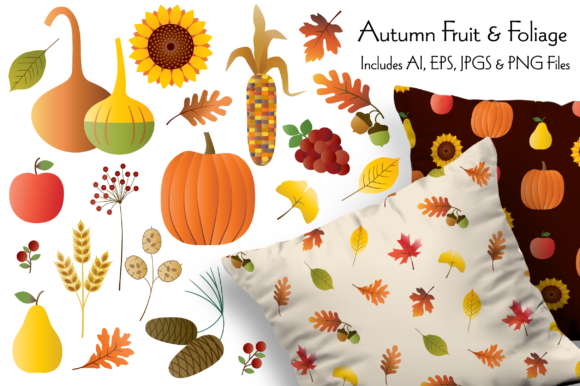
The Autumn Fruit & Foliage Illustrations collection from Melissa Held Designs is a perfect example of such a resource. It’s not just a set of pretty pictures; it’s a versatile toolkit designed for real-world application. The collection features 21 hand-drawn elements—think detailed oak leaves, clusters of winterberries, and stylized acorns—each rendered with a natural, organic feel that avoids looking overly sterile or digital. The style strikes a balance between realism and artistic interpretation, making it suitable for both rustic, traditional projects and more modern, minimalist designs. The hand-drawn quality adds a personal, artisanal touch that can elevate a project from generic to genuinely engaging.
Practical Applications for Designers and Entrepreneurs
The true value of any design asset lies in its adaptability. This collection is delivered in a comprehensive set of formats, including editable AI and EPS vectors, as well as high-resolution JPGs and transparent PNGs. This flexibility is crucial for professionals who need to move seamlessly between different software and project types. As a vector file, the illustrations can be scaled to any size without loss of quality—perfect for large-format printing or tiny digital icons. The PNG files on transparent backgrounds are a lifesaver for quick composites in Photoshop or for use in digital publishing platforms.
So, where do these autumnal elements work best? The applications are extensive:
- Branding and Packaging: Imagine using a delicate leaf motif as part of a logo for an organic food brand, a farm-to-table restaurant, or a boutique candle company. The illustrations can reinforce a brand identity centered on nature, quality, and seasonal change. They are equally effective on product packaging, gift wrap, and labels, adding a layer of perceived value and thoughtfulness.
- Editorial and Publishing: For bloggers, magazine designers, and authors, these assets are gold. They can serve as chapter headings, decorative borders, spot illustrations, or background elements in layouts for cookbooks, lifestyle publications, or holiday content. The consistent style across the 21 pieces ensures visual harmony throughout a multi-page document.
- Digital and Social Media: In the fast-paced world of content creation, having ready-to-use graphics is essential. Use them to create eye-catching Instagram posts, Pinterest pins, website banners, or email newsletter headers that resonate with the season. The transparent PNGs allow for easy layering over photography or solid color backgrounds.
- Craft and DIY Projects: This is where the collection truly shines for hobbyists and small business owners. Create custom scrapbook paper, unique gift tags, Thanksgiving table settings, or printable wall art. The possibilities for physical products like greeting cards, planners, and home decor items are virtually limitless.
Integrating Illustrations into Your Design Workflow
Having great assets is one thing; using them effectively is another. The key is to think of these illustrations as a supporting cast, not necessarily the star of the show—unless the project calls for it. A single, well-placed berry cluster can add a pop of color and interest to a minimalist business card. A repeating pattern of subtle leaf outlines can create a sophisticated background for a wedding invitation.
When working with a collection like Autumn Fruit & Foliage Illustrations, consider these practical tips:
- Color Palette Coordination: The illustrations come in a predefined autumn palette, but as vectors, the colors are easily editable. Adjust the hues to match your specific brand colors or a client’s style guide. This transforms them from seasonal clip art into a customized part of your visual identity.
- Layering and Composition: Use the elements to create depth. Place some illustrations in the foreground with full opacity, and use others in the background with reduced opacity or as a watermark-style pattern. This technique adds visual hierarchy and interest to flat designs.
- Typography Pairing: The organic, hand-drawn nature of these illustrations pairs beautifully with certain typefaces. For a cohesive, artisanal look, consider pairing them with a elegant serif font for headings or a clean sans serif for body text. A complementary script font could also work for more formal, invitation-style projects. The goal is to let the illustrations and typography support each other without competing for attention.
- Consistency is Key: Using multiple elements from the same collection across a project—such as a logo, website, and marketing materials—builds a strong, recognizable visual system. This consistency fosters professionalism and trust with your audience.
Ultimately, a resource like this is about empowerment. It gives designers, marketers, and creators the building blocks to produce high-quality, seasonally relevant work efficiently. It’s about having the right tool for the job, whether you’re designing a full brand identity or simply need to add a touch of autumn warmth to a social media post. The blend of aesthetic appeal and practical file formats makes the Autumn Fruit & Foliage Illustrations collection a worthy addition to any creative’s digital library, ready to be deployed whenever the project calls for a bit of natural elegance.