Nautical Vectors: Flat Illustrations for Sea and Ocean Transport
When you are designing for the travel, logistics, or maritime industry, the challenge is rarely finding an image; it is finding the right image that balances technical precision with emotional appeal. You might need a graphic that clearly explains a shipping route for a corporate presentation, or perhaps a playful icon set for a travel blog. This is where the utility of Cruise Liner. Flat Vector Illustrations comes into sharp focus. These assets are not just pretty pictures; they are functional design tools that bridge the gap between complex nautical concepts and clean, modern aesthetics. For the modern designer or content creator, having a reliable set of nautical navigation graphics is essential for maintaining a professional workflow.
The Power of Flat Design in Nautical Navigation
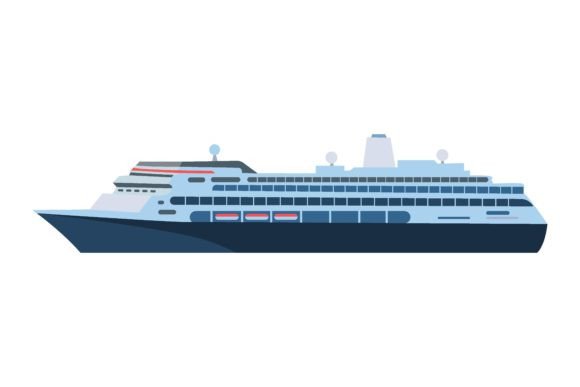
The style of Cruise Liner. Flat Vector Illustrations is defined by its simplicity and clarity. By stripping away heavy gradients, realistic textures, and unnecessary shadows, flat vector design focuses the viewer's eye on the core subject. In the context of sea and ocean transport, this is incredibly effective. A flat vector cruise liner maintains the recognizable silhouette of a massive vessel without getting bogged down in photorealistic details that might clutter a busy layout. The personality of this style is approachable, modern, and highly versatile. It feels technical enough for a logistics dashboard but friendly enough for a children’s educational poster.
Visually, these illustrations often utilize bold, distinct colors to differentiate elements. You will frequently see deep blues for the ocean, crisp whites for the ship’s hull, and vibrant reds or yellows for safety equipment or navigation markers. This high-contrast approach ensures that the graphics remain legible even when scaled down to small sizes for mobile screens or social media icons. The overall appeal lies in this adaptability; a flat vector illustration of a cruise ship can look just as professional on a billboard as it does on a favicon. It represents a modern typography mindset applied to graphic assets—clean, efficient, and user-centric.
Strategic Applications for Designers and Marketers
Understanding where to deploy these assets is key to maximizing their value. For brand identity projects within the travel sector, Cruise Liner. Flat Vector Illustrations serve as excellent foundational elements. Imagine a boutique travel agency rebranding; instead of using generic stock photography, they can use these custom vectors to build a unique visual language. This extends to packaging design as well. If you are designing labels for a seafood company or a nautical-themed product, these illustrations provide a cohesive look that suggests freshness and professionalism without the cost of a custom illustration commission.
In the digital realm, the applications are equally broad. Web design and social media graphics demand assets that load quickly and look sharp on Retina displays. Because these are vector files, they are infinitely scalable, meaning you never lose quality regardless of resolution. For editorial design, such as travel magazines or industry reports, these illustrations break up long blocks of text, improving readability and visual hierarchy. They act as visual anchors that guide the reader through the content. Even for small business owners selling maritime crafts or running a boat rental service, these illustrations offer a way to look established and credible.
Enhancing Visual Hierarchy and Brand Perception
Good design is about communication, and the tools you choose dictate how your message is received. Using Cruise Liner. Flat Vector Illustrations influences how your audience perceives your brand. Flat design is often associated with innovation, efficiency, and transparency. By using these assets, you signal that your brand is modern and user-friendly. This is crucial for logo design and broader brand identity systems. A complex, realistic ship drawing might look dated or overly corporate, whereas a flat vector approach feels fresh and accessible to a younger demographic, particularly the 20-50 age bracket that dominates the digital landscape.
Consistency is another major factor. When you rely on a cohesive set of illustrations, your marketing materials—whether they are email newsletters, website headers, or printed brochures—feel unified. This consistency builds recognition. Over time, your audience begins to associate that specific style of illustration with your brand. This is where the concept of design assets comes into play. You aren't just buying a picture of a boat; you are investing in a component of your visual identity that can be reused across multiple campaigns to reinforce your message.
Practical Guidance for Implementation
Integrating new assets into your workflow requires a bit of strategy. First, consider the font pairing if you are combining these illustrations with typography. Since flat vectors are clean and geometric, they pair beautifully with modern sans-serif typefaces or even a clean serif font for a more traditional maritime feel. Avoid overly ornate script fonts or chaotic handwritten fonts that might clash with the structured nature of the vectors. The goal is harmony between the text and the imagery.
When evaluating the fit of Cruise Liner. Flat Vector Illustrations for a specific project, look at the included styles. Do they offer different perspectives? Are there variations for navigation, weather, or transport? A robust collection will include more than just the ship; it should offer buoys, compasses, waves, and perhaps dock elements. This allows you to build a scene rather than just placing a single icon. Always test the assets in the context of your layout. Place them next to your body copy to check for scale and visual weight. Does the illustration overpower the text, or does it complement it?
Finally, while many resources are available for personal use, always verify the licensing if you plan to use them commercially. As a professional designer or business owner, ensuring you have the rights to use a premium font or graphic asset in a commercial product is non-negotiable. Look for assets that explicitly allow for use in logo design, merchandise, and digital products. This protects your business and ensures that your brand identity is built on a solid, legal foundation. By treating these illustrations as professional design assets rather than just clipart, you elevate the quality of your work and provide tangible value to your clients or audience.